
Architecture for movement, connection & community.
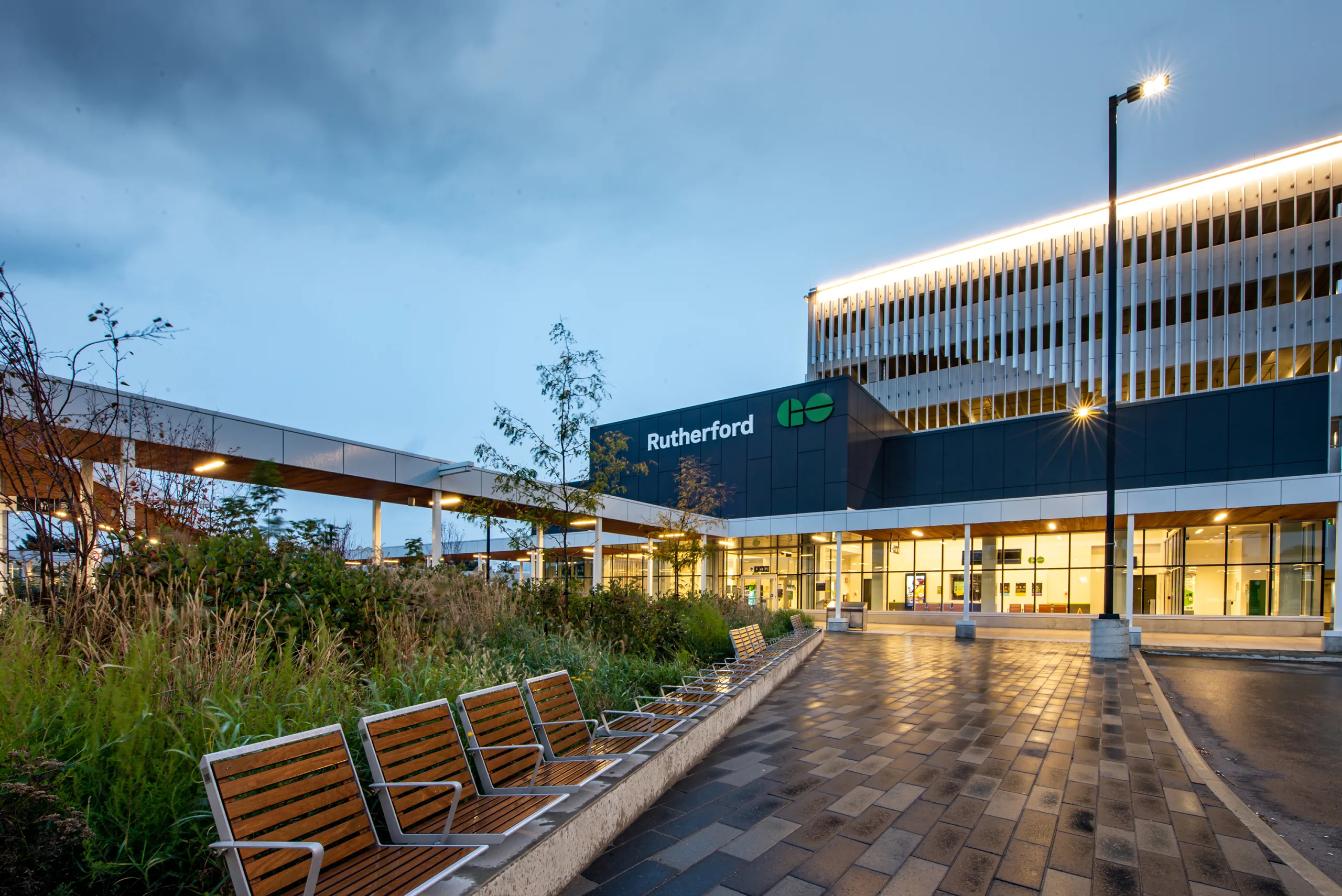
Transit Hubs are both vital infrastructure and celebrated civic spaces. We believe their inspirational form is derived from exceptional performance.
Transit stations are beyond points of arrival and departure: They are gateways to communities, connecting points between people and places, and critical pieces of infrastructure that shape how our cities function and feel, every day.
For five decades, Strasman has helped public agencies and transit authorities deliver facilities that balance passenger experience, accessibility, operational efficiency, safety, and long-term flexibility. From subway stations and mobility hubs, to bus terminals and integrated transit facilities, our work is rooted in a deep understanding of how people, vehicles, systems, and communities interact.
We believe the best transit environments feel intuitive: passengers move confidently, connections are seamless, and operations run efficiently behind the scenes. Every decision from circulation planning and site organization to wayfinding, accessibility, and passenger amenities contribute to an experience that is both functional and human.
A successful Transit Hub must facilitate intuitive interfaces and create pathways to connect. The organization of the site and the integration of the infrastructure and the facilities will be influenced by the needs and requirements of transit users, the client, and many other stakeholders and regulatory agencies that will challenge the initial vision. Bringing the Hub to life must be a collaborative process with many different, interested parties that understands how to find the opportunities in those same challenges.
For five decades, Strasman has helped public agencies and transit authorities deliver facilities that balance passenger experience, accessibility, operational efficiency, safety, and long-term flexibility. From subway stations and mobility hubs, to bus terminals and integrated transit facilities, our work is rooted in a deep understanding of how people, vehicles, systems, and communities interact.
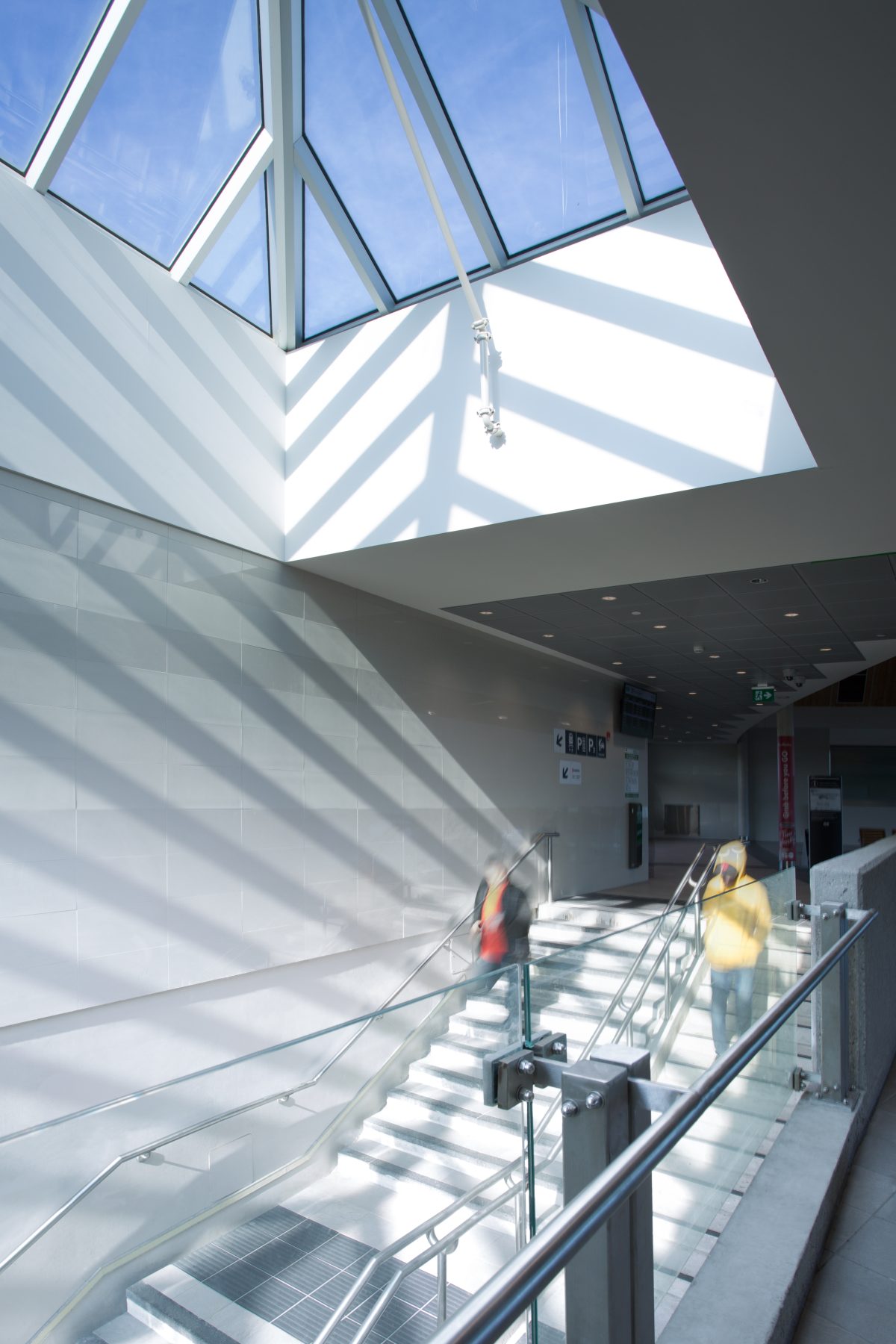
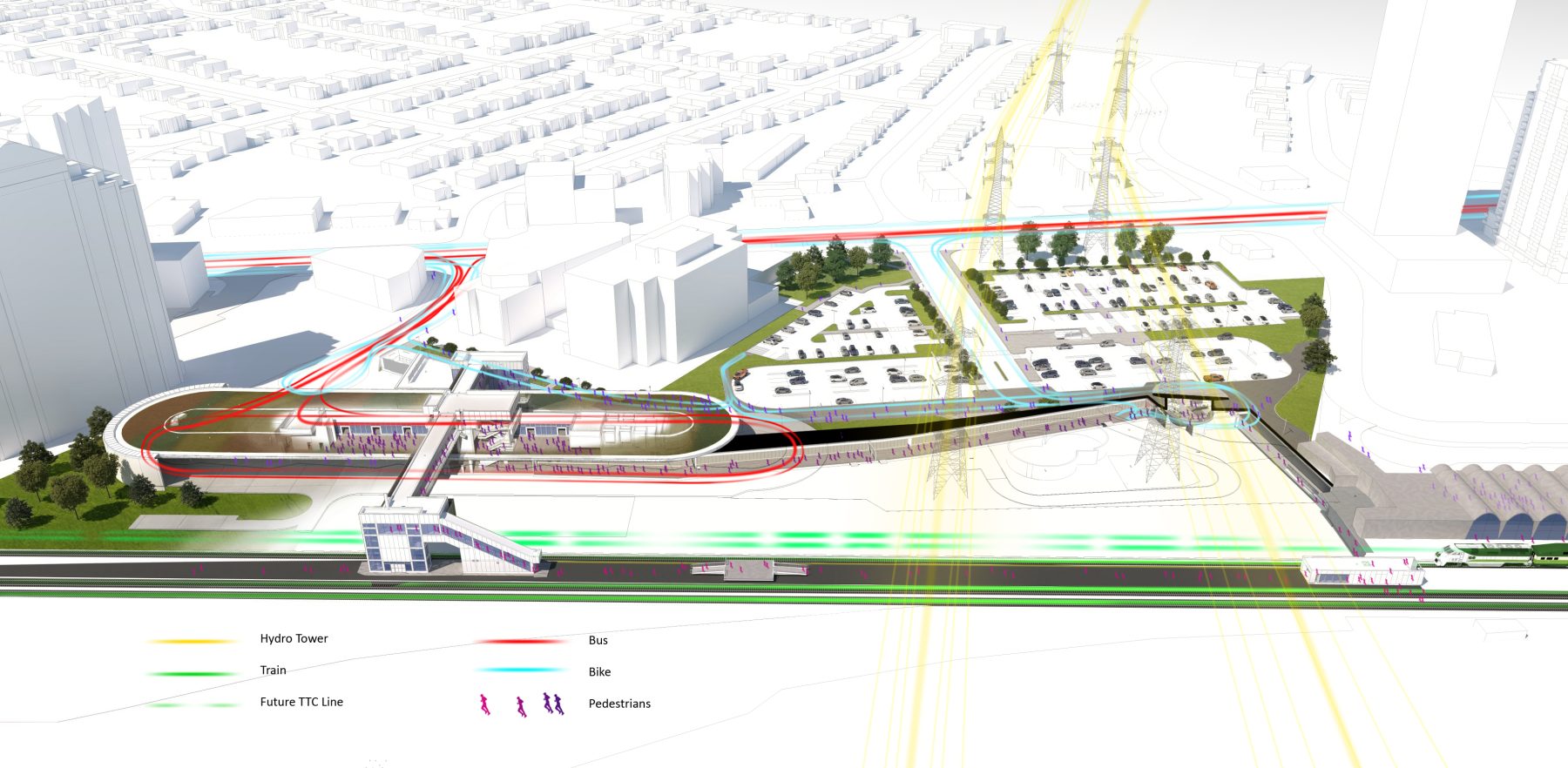
Beginning with Eglinton & Yorkdale Stations in the 1970’s to designing and delivering the recent Kipling Transit Hub, the GO Rutherford Transit Node, and the redevelopment of TTC’s Warden Station and Hub, we understand that bringing the project vision to life on these complex, specialized stations and hubs is a monumental effort. Successfully navigating this effort requires a commitment to realizing a vision for connecting, and knowing that balancing the many interests of different stakeholders, and achieving collective buy in, means arriving to the project with an understanding of vital operational and critical functionality – of what cannot be compromised – and working within that context to creating an intuitive, holistic design solution that encompasses all the stakeholder requirements and delivers an elevated experience to the community.
Connecting Communities
Transit infrastructure plays an important role in shaping our neighbourhoods,
often serving as first impressions, landmarks, and gathering spaces.
For fifty years, Strasman has been an integral part of helping to build subway, LRT, and Regional Rail across Toronto and the GTA.
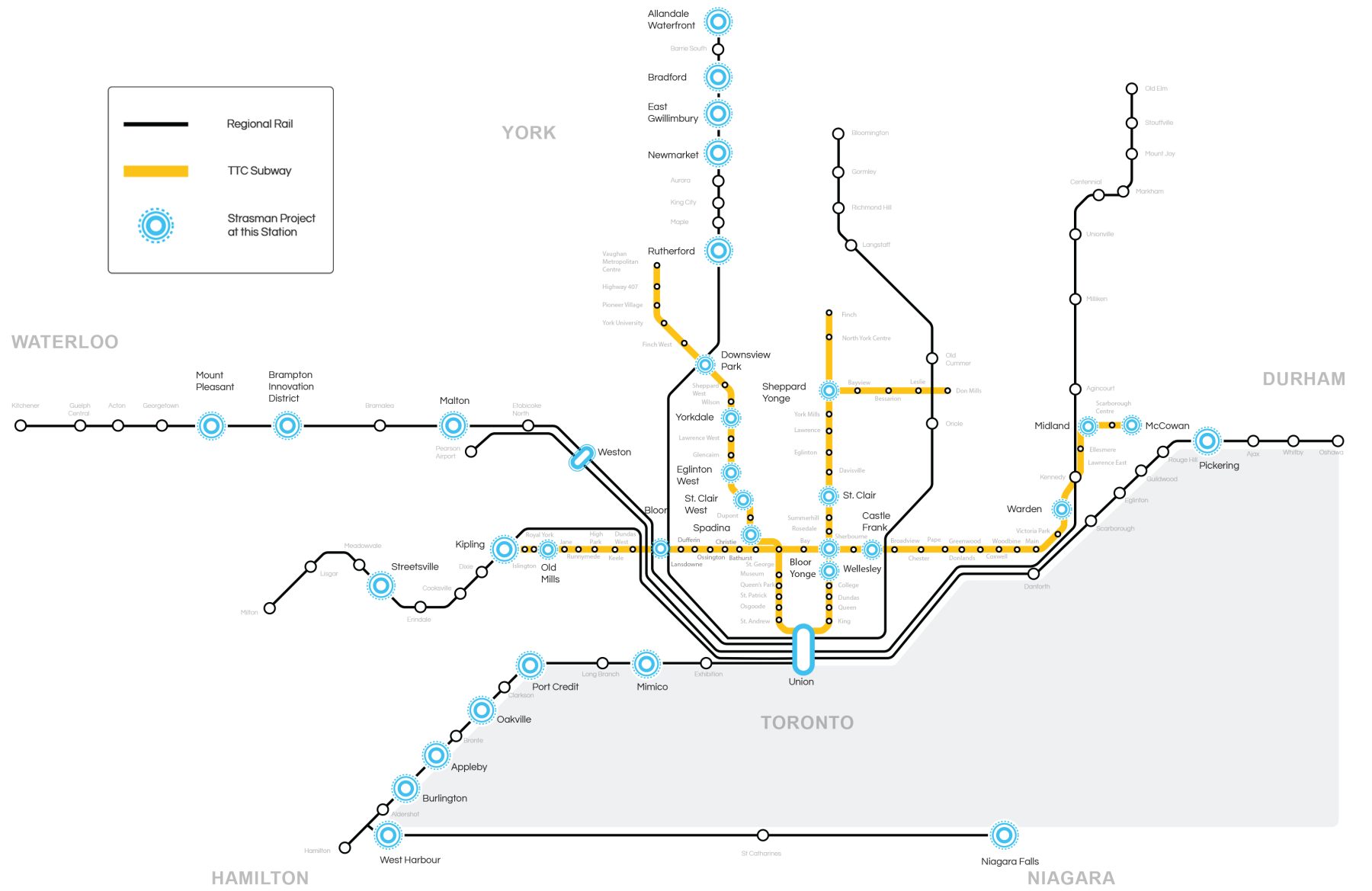
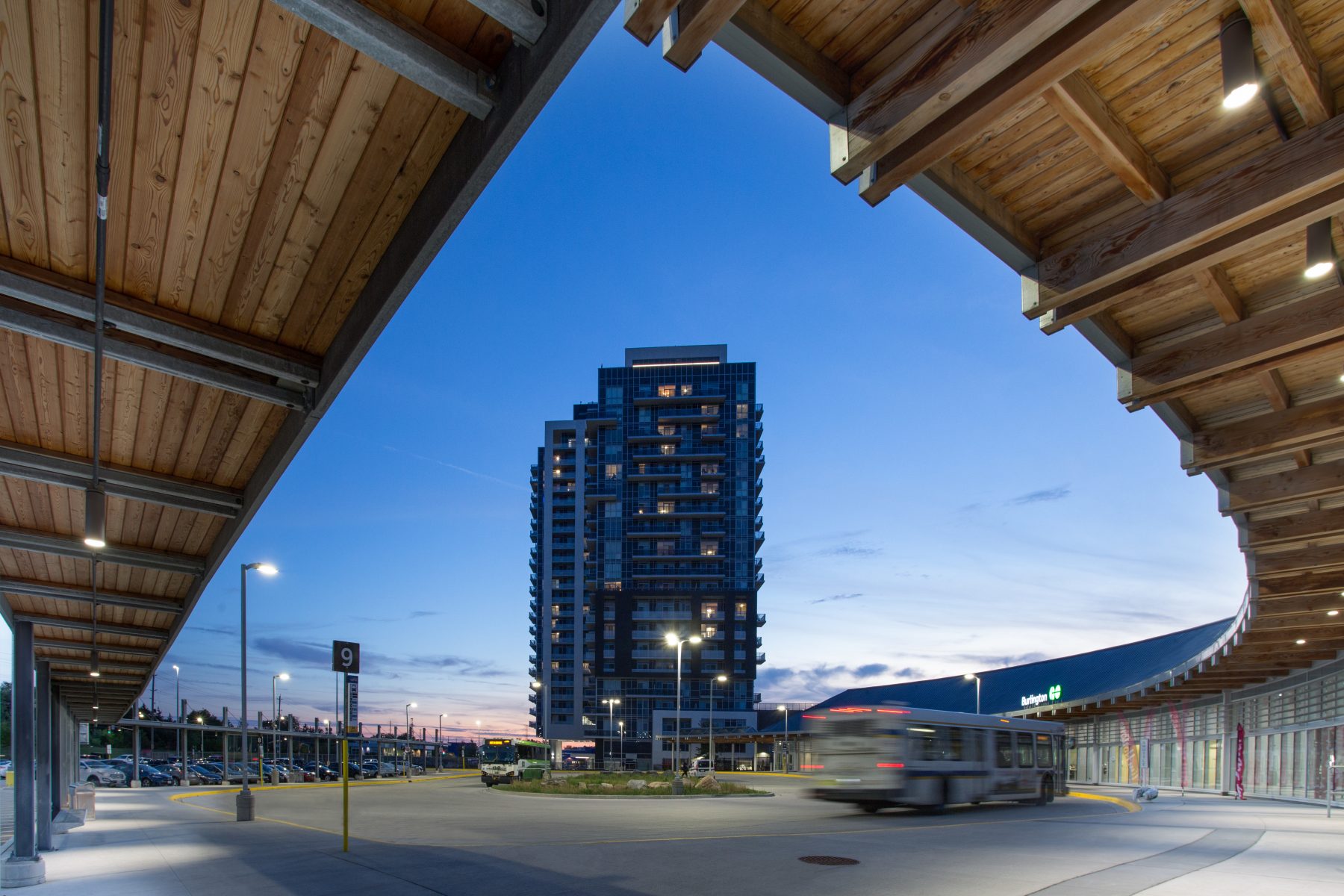
Transit projects are among the most complex public facilities to deliver. They must balance evolving technologies, accessibility requirements, security considerations, operational demands, multiple stakeholders, and uninterrupted public service. At Strasman, our work is rooted in a commitment to engage with and listen to our clients, investing the time to understand their needs before developing solutions. Our project teams are assembled to bring the best to each client, and our Principals are part of every project from design through construction, ensuring responsiveness, accountability, and continuity throughout the process. This collaborative approach enables us to navigate complexity, build consensus, and deliver transit environments that are both operationally effective and designed to grow.